Loading
Model 3

The Brands Architecture Builder Model

Model 3: The Brands Architecture Builder Model

As businesses grow, their brand portfolios often grow with them, and in most cases without a sound plan. A product becomes a sub-brand. A sub-brand becomes a standalone entity. Over time, the structure becomes difficult to navigate from the outside and expensive to maintain from the inside.

The Brands Architecture Builder Model brings order to that complexity. It is a structured process for designing brand architecture that works: logical, consistent, and built to support growth rather than complicate it.
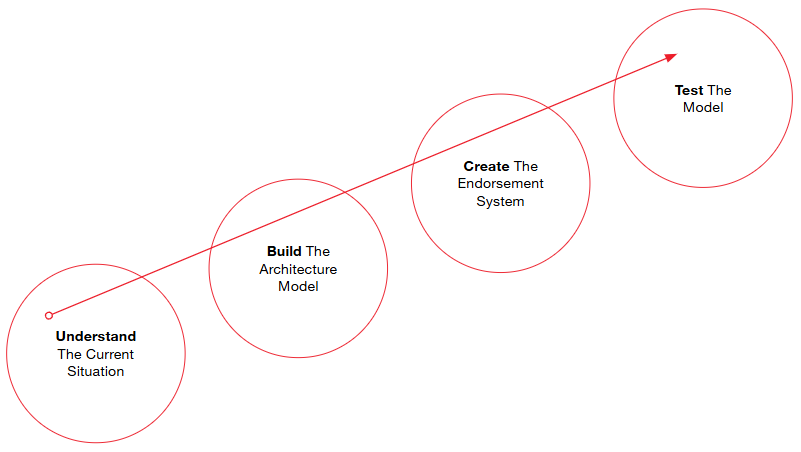
The brand architecture builder model shows an ascending process that goes through 4 steps; Understanding the current situation, building the architecture model, creating the endorsement model, and testing the model.

  1. Understand the Current Situation.

    Before any restructuring begins, we establish an accurate picture of what exists. We assess every brand in the portfolio, understand its role and scope, map the relationships between them, and identify where the current structure creates confusion, duplication, or missed opportunity.

  2. Build the Architecture Model.

    With the current situation understood, we design the appropriate structure. This means defining the role of each brand, the relationship between parent and extended brands, and finding or creating the model that best serves the business; whether that is a branded house, a house of brands, an endorsed model, or a customized hybrid built specifically to the needs of the portfolio.

  3. Create the Endorsement System.

    Architecture without a consistent endorsement system loses its portfolio's synergy. This stage defines how brands within the portfolio reference and support each other, add value to one another, or separate one from the other, and how the structure is expressed visually and verbally across all communications.

  4. Test the Model.

    The architecture is tested internally before it is implemented. We stress-test the structure against perception and business growth plans to confirm it is fit for purpose.

The outcome is a brand structure that creates clarity for customers and competitive coherence for the business.